


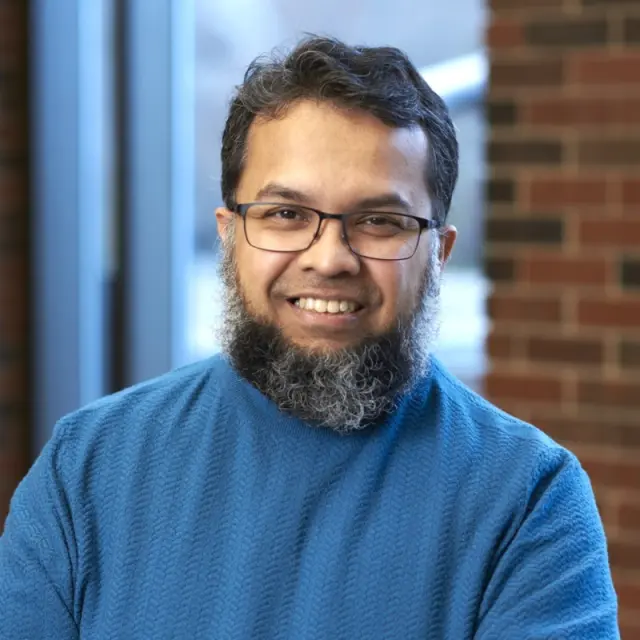
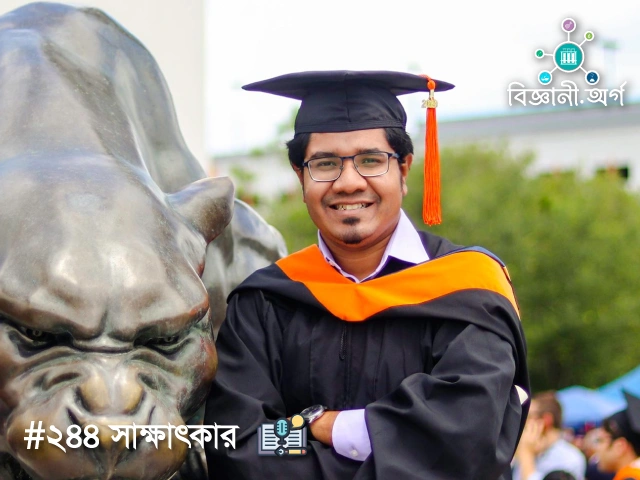
In this edition of our interview series with the younger generation, we have interviewed Dr. Muhammad Mustafa Hussain. He is currently a professor at the Elmore Family School of Electrical and Computer Engineering at Purdue University in the USA. Previously, he was a professor of Electrical Engineering at UC Berkeley and KAUST. He has served as the Program Manager at Sematech and led the development of 22-nanometer node FinFET transistors at Texas Instruments. He completed his Bachelor’s from BUET in 2000. His research is focused on future technologies and electronics, and he is the author and inventor of over 450 research papers and patents. Dr. Hussain is a Fellow of IEEE, the American Physical Society (APS), and the Institute of Physics (UK). His work has been widely covered by international media, and he has received 47 international awards, including the Best Innovation Award at CES 2020 and the 2020 Edison Award. He has supervised the PhD research of 19 students.
His primary research focus is the invention of new electronic applications for the “Internet of Everything.” This spans from healthcare to robotics, agriculture to marine environments, defense to space exploration. He develops innovative ideas and leverages micro and nanofabrication technologies to create ultra-small and multifunctional electronics.
When the Science.org team was reviewing his Google Scholar profile before the interview, they were astonished by the number of citations his research papers have received. The number of citations indicates how many times other researchers have referenced a scientific paper. In other words, a paper with a high citation count signifies its greater importance to the research community. The total citations for all his papers exceed ten thousand. This number highlights the significant impact a Bangladeshi researcher is having on the global scientific stage.
Watch his interview video below.
Video Link: https://youtu.be/t6EDqV7bCWE
Examples of questions asked in the interview:
- What is your area of research? Can you explain your main research topic in simple terms for us?
- How is your research work benefiting us, or how might it benefit us in the future?
- Could you share any special experiences from your research work? Any experience that profoundly impacted your life?
- What qualities do you think a scientist should possess? Science.org’s main readers are students, young scientists, and researchers. Please give them some guidance.
- Do you have any message for young Bangladeshi students who want to pursue a career in science?
- What is the Internet of Everything (IoE), and how does it impact various sectors (like healthcare, robotics, agriculture)? What challenges might arise in ensuring security via the Internet of Everything (IoE)?
- How is nanofabrication technology significant in robotics or space research? How can nano and microelectronics technology enhance cyber security systems?
- How can security be maintained when applying IoE technology in the defense sector? For instance, I think in two separate incidents in Lebanon, thousands of pagers and radio devices exploded. How did they hack into the pagers? Is this related to IoE in any way?
- How does a virtual classroom provide training to regular students, and what are its benefits?
- If you could mention some limitations of Internet of Everything (IoE) technology. Etc.
Contact information for Dr. Muhammad Mustafa Hussain:
Email: [email protected]
LinkedIn: Linkedin
Google scholar: google scholar
This interview was taken by Md. Jamil Khan. He is a student in the CSE department at Metropolitan University, Sylhet. Email: [email protected]






Excellent interview, lots of useful information shared!